CitizenCity
High-capacity roads, road safety and accessibility
What is the project?
CitizenCity is a European project under the Data Spaces for Smart Communities initiative, which promotes the development of Data Spaces for smart communities.
The project aims to facilitate the secure, interoperable and governed exchange of data between public and private sector stakeholders, with a view to improving decision-making and creating new digital services in smart cities.
To this end, CitizenCity develops and validates data-driven solutions in different contexts, promoting collaboration between public authorities, businesses and research centres.
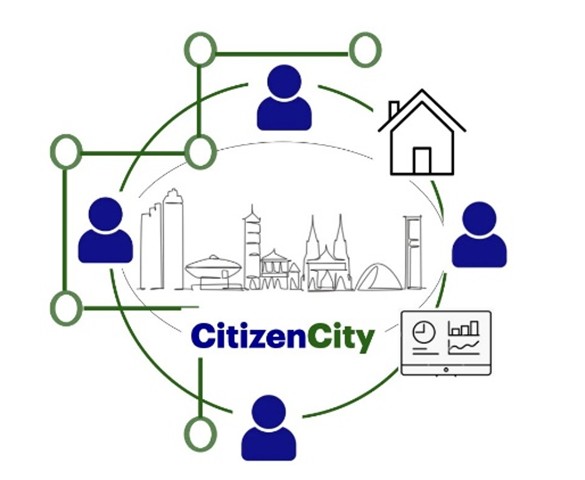
CitizenCity tackles these challenges by:
The management of urban services and infrastructure is hampered by fragmented and reactive systems, with data scattered amongst multiple stakeholders and lacking effective integration. This limits the ability to anticipate issues and reduces the efficiency of decision-making.
-

Data integration
from multiple sources.
-

Using Data Spaces
to ensure interoperability, governance and trust in data sharing.
This allows:
- Improving data-driven decision-making
- Increasing efficiency in service management
- Optimising RUL, routes and energy consumption
- Optimising the use of resources
- Fostering collaboration between public and private sector stakeholders
Aims of the project
-
1
Development of data services for road management
-
2
Integration of multiple data sources into a Data Space
-
3
Encouraging participation from users and stakeholders
-
4
Validation of solutions in real-world environments
KPI´s
-
Organisation of a kick-off meeting
to work together on the redesign of urban districts.
-
25 citizens participating
in engagement activities during the implementation of the use case, providing their views on privacy and the use of a control panel or smart app, and interested in moving to the redesigned district.
-
4 organisations will participate in the data ecosystem,
leading to the conceptualisation of at least 3 new products or services based on shared data.
-
Online visibility
200 unique visitors to the project website and the organisation of 3 dissemination webinars with 20 registered attendees at each.
-
Establishment of 5 links with other projects
to share results and conclusions, including participation in at least 1 joint event with representatives from those projects.
-
10 per cent of road users will use the
road condition notification app to provide information on road conditions.
-
Reduction in energy
consumption and waste by 10 per cent.
Use cases:
Three use cases running in parallel to implement Data Spaces in accordance with the guidelines and model provided by Data Spaces for Smart Communities.
Use cases:
-
Eindhoven, Netherlands:
Development of a Positive Energy District through collaborative planning, utilising data spaces to support the sustainable urban energy transition.
-
Oulu, Finland:
Creation of a cross-sectoral participatory data space integrated with the Local Digital Twin, enabling interaction to support urban planning and decision-making.
-
Álava, Basque Country:
Winter road management, utilising weather, traffic and infrastructure data to drive informed decisions and improve the ability to respond to extreme weather events.
Two main solutions are being implemented:
-

A heat map that provides detailed information on road surface temperature to anticipate the risk of ice and assist decision-making by teams responsible for winter road maintenance
-

An alert system that informs road users of road conditions and any incidents, to ensure their safety
Timeline and milestones
Key phases in the design, validation and scaling of the solution.
-
Sep 2025
PLANNING
- Definition of the scope and purpose of the data exchange
- Definition of the data exchange model
- Preliminary business model defined, including a value-added proposition for each partner and a scaling model
- Identification of initial partners and wider stakeholders
-
March 2026
DEFINITION
- Minimum pilot network defined
- Legacy framework defined
- Systems integration
-
June 2026
PILOT
- Roll-out of solutions
- Implementation of the pilot